A short bout of abdominal pain and diarrhea or constipation now and then is not unusual. But long-term or recurring symptoms are not normal. They may signal irritable bowel syndrome (IBS) – and are generally treatable.
A key to achieving relief for irritable bowel syndrome (IBS) is the understanding that IBS is a complex motility (motor) and sensory disorder. It may have physical and stress-related dimensions.
A strong partnership between a knowledgeable patient and an empathetic, knowledgeable health care provider can produce significant improvement and control over symptoms for individuals with IBS.The first line of treatment for IBS includes general measures such as:
- establishing an effective patient-physician relationship,
- obtaining education about IBS, and
- implementing lifestyle changes, which may be associated with symptoms.
IBS Treatments Depend on Symptom Severity
Mild symptoms occur infrequently. They sometimes interfere with normal daily functioning.
Moderate symptoms occur more intensely and frequently. They more often interfere with daily activities.
Severe symptoms are frequent and intense. They chronically interfere with daily functioning.
Whether mild, moderate, or severe all IBS treatment should begin with education about the nature of the disorder…
- IBS is a long-term condition
- Symptoms flare over and over again
- Symptoms can change over time
- The symptoms themselves are not life threatening
- IBS is not a risk for another more serious disease
For moderate symptoms consider…
- Use of a diary, such as IFFGD’s Personal Daily Diary, to help find factors that worsen or bring on symptoms
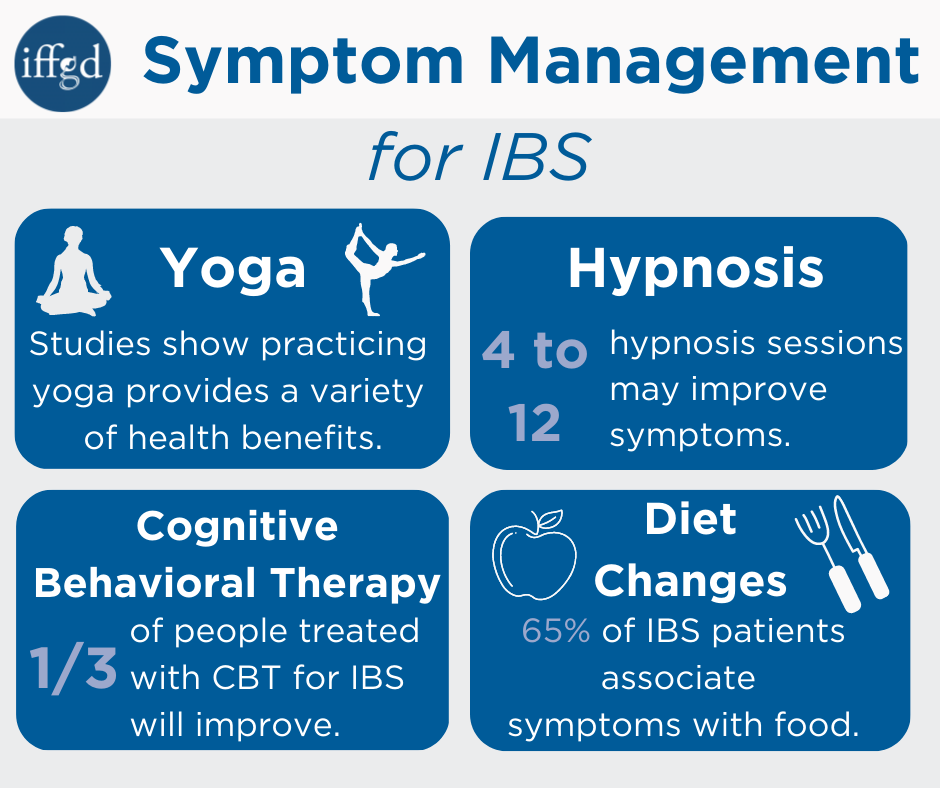
- Stress management, gut-directed hypnosis, biofeedback, relaxation, or pain management techniques
- Consulting with your physician about the use of drug therapy. This often depends on your dominant bowel symptom
If symptoms are severe, also consider…
- The use and benefits offered by cognitive-behavioral therapy
- Consulting with your healthcare provider about the use of drug therapy for treatment of pain and bowel symptoms.
- Use of a low-dose antidepressant, which acts on pain and other symptoms.
- Seeking referral to a pain treatment center. These specialty centers are usually connected with universities.
| IBS is... | IBS is NOT.... |
|---|---|
| A long-term condition | Is NOT caused by diet |
| Symptoms tend to come and go | Is NOT caused by stress |
| Symptoms can change over time | Is NOT a risk for cancer |
| Symptoms can usually be managed so that you feel better | Is NOT a risk for colitis |
| Does NOT cause malnutrition | |
| Does NOT get worse with age | |
| Does NOT shorten life span |
Are there certain things that seem to worsen your IBS? If so, sorting these out can be helpful. While not causes, things like diet and stress can sometimes influence symptoms. This is not always clear-cut. Using a diary for 2-3 weeks can help identify factors that seem to worsen or trigger symptoms. Discuss your findings with your doctor.
Lifestyle factors
Lifestyle habits do not cause IBS. But minimizing excesses may help reduce or avoid symptom flare-ups. Things like lack of sleep and lack of exercise, prolonged stress, or irregular eating habits can worsen symptoms.