
The 1st Step in IBS treatment includes general measures such as:
- implementing diet and lifestyle changes, which may be associated with symptoms,
- obtaining education about IBS, and
- establishing an effective relationship between the patient and their health care provider.
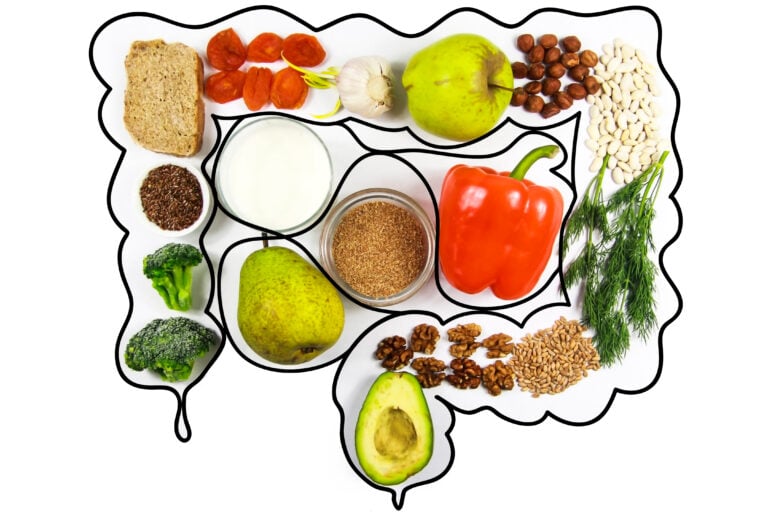
Connections between food and health has been known for centuries, but there is increasing interest regarding how diet and nutrition affect gastrointestinal (GI) function and symptoms. This interest has largely been focused on using dietary changes to treat IBS. In patients with IBS, up to 2/3 of patients report increased GI symptoms after meals.
IBS symptoms are likely due to numerous causes. One cause is an exaggerated response of the body to food. The body is smart, and it knows when food is entering the stomach. The colon should start preparing to send the food out. This is called the gastrocolic reflex. In some patients, this reflex is too strong and the colon can start to squeeze too fast or strong when food is eaten. Another cause is when the bacteria in the small bowel breakdown food. Some foods are broken down via fermentation (metabolic process that produces chemical changes in organic substrates through the action of enzymes), which results in increased gas and water inside the intestines. This increased gas and water can cause symptoms of diarrhea, bloating, and gas.
So let’s talk about diet and IBS
Traditionally, dietary advice for IBS patients had included avoidance of caffeine, alcohol, fatty foods, and spicy foods. However, the growing evidence supporting dietary modification to treat IBS has led to new knowledge regarding additional therapies. The diet therapies noted below is a listing of some available diets used by those with IBS.
The influence of diet is unique to each person. There is no generalized dietary advice that will work for everyone. During your appointment with your healthcare provider, they may take a brief dietary history to help identify dietary and/or other factors that may impact symptoms.
It is important to note that often, people with IBS report that some foods can be bothersome at certain times but not at other times. There is a sense of inconsistency and unpredictability. It may be helpful to keep a diary for 2–3 weeks regarding dietary intake, symptoms, and any associated factors (like daily obligations, stressors, poor sleep, medications) to help identify trigger foods.
General dietary recommendations include:
- eating regular meals at a slower pace
- eating until feeling full and not more
- drinking at least 8 cups of fluid per day
- limiting intake of tea and coffee to 2 cups per day
- reducing intake of alcohol and carbonated or sugary drinks
- and avoiding garlic and onions and any other foods that consistently trigger symptoms
Cramping or Diarrhea Causing Foods
Certain foods are known to stimulate gut reactions in general. In those with irritable bowel syndrome (IBS) eating too much of these might bring about or worsen symptoms.
Meals that are too large or high in fat, coffee, caffeine, or alcohol may provoke symptoms of abdominal cramps and diarrhea.
Eating too much of some types of sugar that are poorly absorbed by the bowel can also cause cramping or diarrhea. Examples include:
- Sorbitol, commonly used as a sweetener in many dietetic foods, candies, and gums
- Fructose, also used as a sweetener and found naturally in honey as well as some fruits
Gas Producing Foods
Eating too much of foods that are gas producing may cause increased gaseousness. This is particularly the case since IBS can be associated with bloating and retention of gas. Gas producing foods may include:
- Beans
- Raisins
- Bagels
Dietary Fiber
Fiber supplementation (total fiber intake of 25-30g per day) is a long-standing recommendation for IBS. However, the data regarding fiber to treat IBS is mixed. One study showed no significant benefit in bran treating IBS symptoms but showed psyllium did improve IBS symptoms. Soluble fiber (e.g. psyllium and pectin) is recommended instead of insoluble fiber (e.g. bran).
Gluten-Free Diet
The role of gluten (a protein found in wheat, barley, and rye) as a cause of IBS symptoms is unclear. A survey of IBS patients demonstrated about one-fifth of IBS patients had tried a gluten-free diet, but the results of research studies are mixed regarding if a gluten-free diet is helpful in IBS. It should also be noted that wheat (which is high in gluten) is a high FODMAP food and is excluded in a low FODMAP diet. So, some of the benefit of a gluten free diet may be due to the lower FODMAP content rather than the lower gluten content.
Low-Histamine Diet
Histamines can be found in some preserved and fermented foods, such as canned foods, cheese, and alcohol. Although there are conditions linked with elevated histamine levels, such as mastocytosis, the role of histamine in IBS symptoms is a bit unclear as it has not been tested much in IBS patients.
The interest in using a low histamine diet to treat IBS is supported by the fact histamine has been associated with diarrhea and abdominal pain. Also, IBS patients commonly associate their symptoms with foods containing histamine. Treatment of histamine intolerance involves avoiding histamine-containing foods for a few weeks and slowly reintroducing histamine-containing foods to identify trigger foods and/or food quantities. This process is very similar to the steps in the low FODMAP diet.
Although there is growing interest in this diet, there is little evidence this diet is helpful, and more research needs to be done to determine if it helps decrease IBS symptoms.
FODMAPs
In 2014, researchers at Monash University published the first study regarding a diet that excluded specific types of carbohydrates. This diet was called the low FODMAP diet. FODMAP stands for fermentable oligosaccharides, disaccharides, monosaccharides, and polyols. FODMAPs and other nutrients are broken down by bacteria in the small bowel and colon via a process called fermentation. This process of fermentation produces gas and draws water into the intestines. The increased gas and water can cause diarrhea, bloating, and flatulence (passage of gas). Following a low FODMAP diet improved GI symptoms in approximately 52% to 86% of IBS patients.
It it important to understand that the low FODMAP diet is intended to be a short-term “diagnostic diet,” which helps patients identify trigger foods. This diet consists of a 3-6 week restriction of all FODMAP foods. If GI symptoms improve, each food group is re-introduced over the next few weeks to help identify which foods are triggers.
Before starting the low FODMAP diet, it is important to consult your healthcare provider to see if this diet is a good treatment option for you and to work with a registered GI dietitian.
Rice Based Foods
Question:
I’ve read that rice, including rice milk and rice flour, is beneficial to people with digestive disorders like IBS because it is easier to digest. As an IBS sufferer, would my symptoms improve if I replaced some of the foods in my diet with rice-based alternatives?
Answer:
If you have IBS, you may find that certain foods tend to be more bothersome than others. However, you need to make sure that your body is optimally nourished, even if you choose to cut back or eliminate some items from your diet. Some IBS sufferers find that foods with gluten (found in wheat, barley, and rye) may not be tolerated well; this means breads, bagels, and pasta. The body still needs carbohydrates, so the rule is to discriminate, not eliminate. Rice or rice pasta can be used as a grain alternative to pasta, or rice based breads and crackers can replace wheat products. If you choose to use rice milk, be aware that it is not as high in protein as cow’s milk, and unless you have lactose intolerance or food allergies, you will get more nutritional value from milk.
Also, rice flour does have a different texture and can be somewhat grainy, so if you choose to use it to replace flours in recipes, be prepared for a different texture as well as a different look to the baked foods. Breads and muffins will be denser, and heavier prepared with rice flour.
– Leslie Bonci, MPH, RD, LDN
Contributor
Leslie Bonci, MPH, RD, LDN, Director of Sports Nutrition, University of Pittsburgh Medical Center, Pittsburgh, PA
Food Allergies vs. Food Sensitivities
Although very few adults have food allergies, up to 65% of IBS patients report food intolerances. Food allergies differ from food intolerances in that food allergies involve an immune response and food intolerances do not involve the immune system. There is increasing popularity of blood tests to evaluate food intolerances; however, research has not shown these tests to be helpful.
Summary
- Irritable bowel syndrome (IBS) affects 5% to 10% of the population and is defined by abdominal pain associated with a change in the frequency or form of stool.
- Up to 2/3 of IBS patients associate symptoms with eating food, and up to 90% of IBS patients exclude certain foods in an attempt to avoid or improve GI symptoms.
- A dietary approach is helpful for patients who identify a dietary component to their symptoms.
- Consuming 25-30 g of fiber per day avoiding caffeine, alcohol, fatty foods, and spicy foods are helpful for some IBS patients.
- Among the currently tested diets for IBS, the low FODMAP diet has been shown to be the most beneficial.
- Diets that include restricting or avoiding many types of foods, including the low FODMAP diet, should be guided by a dietitian.
- Restrictive diets for treatment of IBS typically include a few weeks of strict avoidance followed by slow reintroduction of foods to identify food triggers. The strict avoidance phase is not intended to be continued long-term.
- Restrictive diets are typically not recommended in patients with a low BMI, ongoing weight loss, or nutritional deficiencies.
- Food allergy tests should not be used to evaluate food intolerances in IBS patients.
Dietary Modifications
If dietary factors seem to influence symptoms, guidance needs to be provided by a knowledgeable health care professional (like a physician or registered dietitian) who can assess individual circumstances while helping make sure that nutritional needs are being met through a balanced diet and healthy eating habits.
Adapted from IFFGD Publication #120 by Kim Harer MD, Clinical Lecturer, Internal Medicine, Division of Gastroenterology, University of Michigan, Ann Arbor, MI; Edited by: Shanti Eswaran MD, Associate Professor, Internal Medicine, Division of Gastroenterology, University of Michigan, Ann Arbor, MI and adapted from IBS Publication #101 IBS Overview Lin Chang MD, Professor of Medicine at the David Geffen School of Medicine at UCLA, Los Angeles, CA; adapted from article by Douglas A. Drossman MD, Drossman Gastroenterology PLLC, Chapel Hill, NC; edited by William D. Chey MD, Nostrant Collegiate Professor, University of Michigan, Ann Arbor, MI

